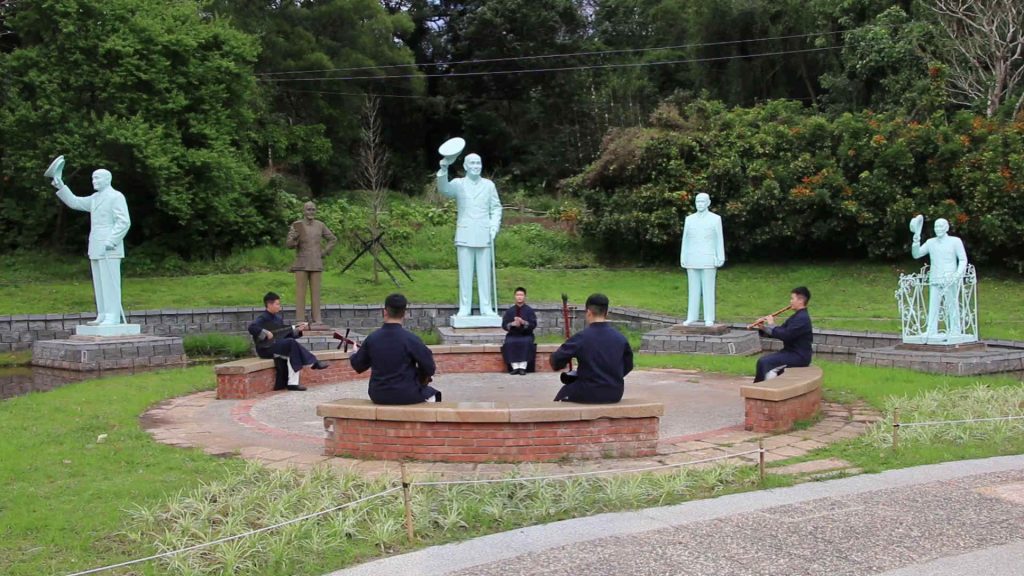
video / audiovisual composition for Lâm-koán ensemble (2020-24), 6 min.
“Prayer for Taiwan” is an audiovisual composition for an ensemble of traditional instruments in the style of Taiwanese lâm-kóan music, consisting of sam-hiân (three-stringed fretless lute), pê (four-stringed lute), phek (tonewoods), siau (vertical flute) and jī-hiân (two-stringed string instrument). The melody appears only in fragments. It is based on the piano piece “A Maiden’s Prayer” by Polish composer Tekla Bądarzewska-Baranowska, published in 1856, which is used as the signature tune for rubbish collection in Taiwan.
The recording took place in the Cihu Memorial Sculpture Park in Taiwan. The fivefold appearance of the musician imitates the arrangement of the Chiang Kai-shek sculptures there. As a result of the critical process of coming to terms with the history of the military dictatorship under Chiang’s rule, many of the Chiang Kai-shek sculptures that had been removed from public spaces have been collected and reinstalled there since 2007. This park – not far from Chiang’s former residence – has thus become a symbol of an ambivalent reappraisal of history.
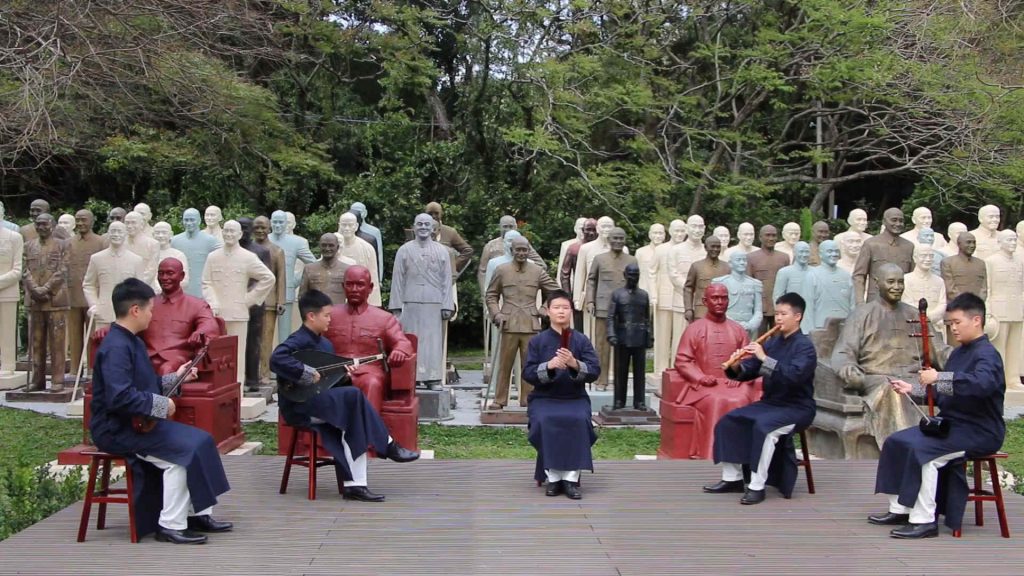
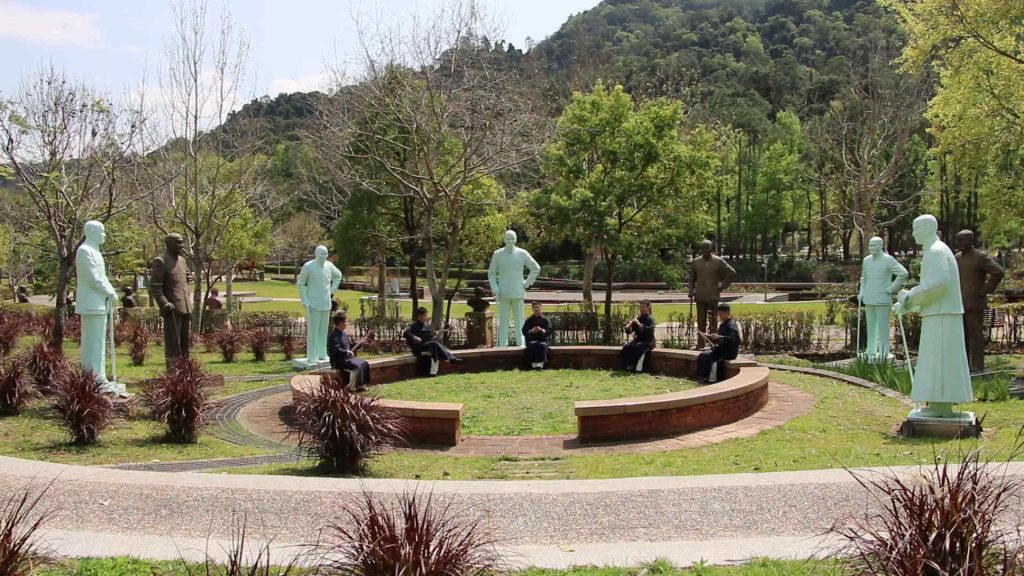
Concept, composition, film, production: Tobias Klich
Musical interpretation (Lâm-koán ensemble: Samhiân, Pê, Phek, Siau and Jīhiân): HE Yi-Jen
Sound recording, production assistance: CHEN Chengwen
Recordings: February / March 2024
Cihu Memorial Sculpture Park, Taiwan
Treasure Hill Artist Village Taipei, Taiwan
A production by tritonus e.V.
Supported by:
Filmbüro Bremen / nordmedia
Goethe-Institut
stiftung schwule freunde bremen